
WHAT IS YAKISUGI

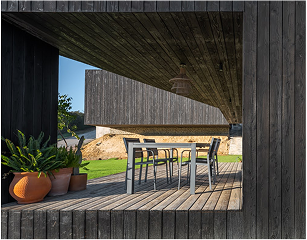
Carbonized Yakisugi Wood: tradition, beauty and resistance
Yakisugi is a traditional Japanese technique also known as Shou Sugi Ban. The technique chars the wood surface with an open flame and then brushes it to reveal a distinctive carbonised texture.
The process improves the wood’s resistance and durability while creating distinctive aesthetic qualities. Yakisugi is valued for its natural beauty and its ability to withstand weathering and external exposure, making it a popular choice for a range of architectural and design applications.
The wood is commonly used for facades, interior cladding, terraces, fences and other architectural and decorative elements. Its distinctive appearance, resistance and durability make it a versatile option for residential and commercial projects. The Yakisugi technique is also valued because its natural charring process does not require harmful chemicals.
En resumen, representa una balanced combination of natural beauty, durability and environmental responsibility, making it an ideal choice for those looking for high-quality and stylish building materials.
Aplicaciones de la
Charred Yakisugi Wood
The versatility of Yakisugi wood makes it suitable for a wide range of design and construction applications. From building facades to interior cladding and furniture, it adds a distinctive character to each project. Its resistance to outdoor exposure makes it particularly suitable for terraces and fences, where its appearance can be appreciated for years.
Yakisugi is also a popular choice among designers and architects seeking responsible materials. Its natural production process and long service life make it well suited to projects that aim to build more consciously.
In summary, Yakisugi wood offers a striking aesthetic together with the durability and responsible material qualities that distinguish it in architecture and construction.