Some qualities do not appear on plans and cannot be measured at a glance.
They are what we perceive when entering a space and feeling a calm that is difficult to explain: a light air, a serene atmosphere, a feeling of well-being that invites us to stay there.
The true beauty of a place does not reside only in its shapes, its materials or the light that passes through it, but also in what we breathe and in how that environment silently dialogues with our body.
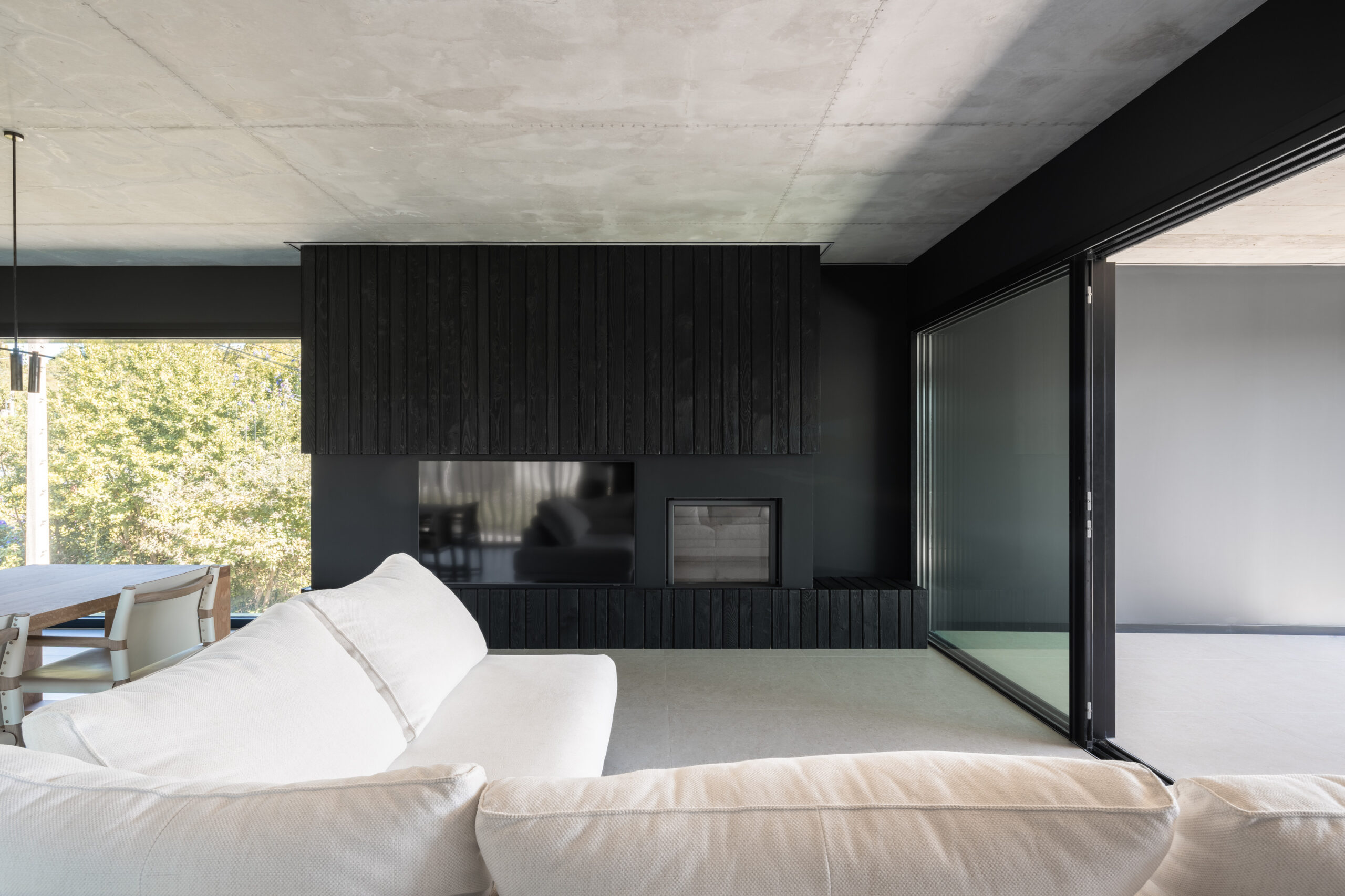
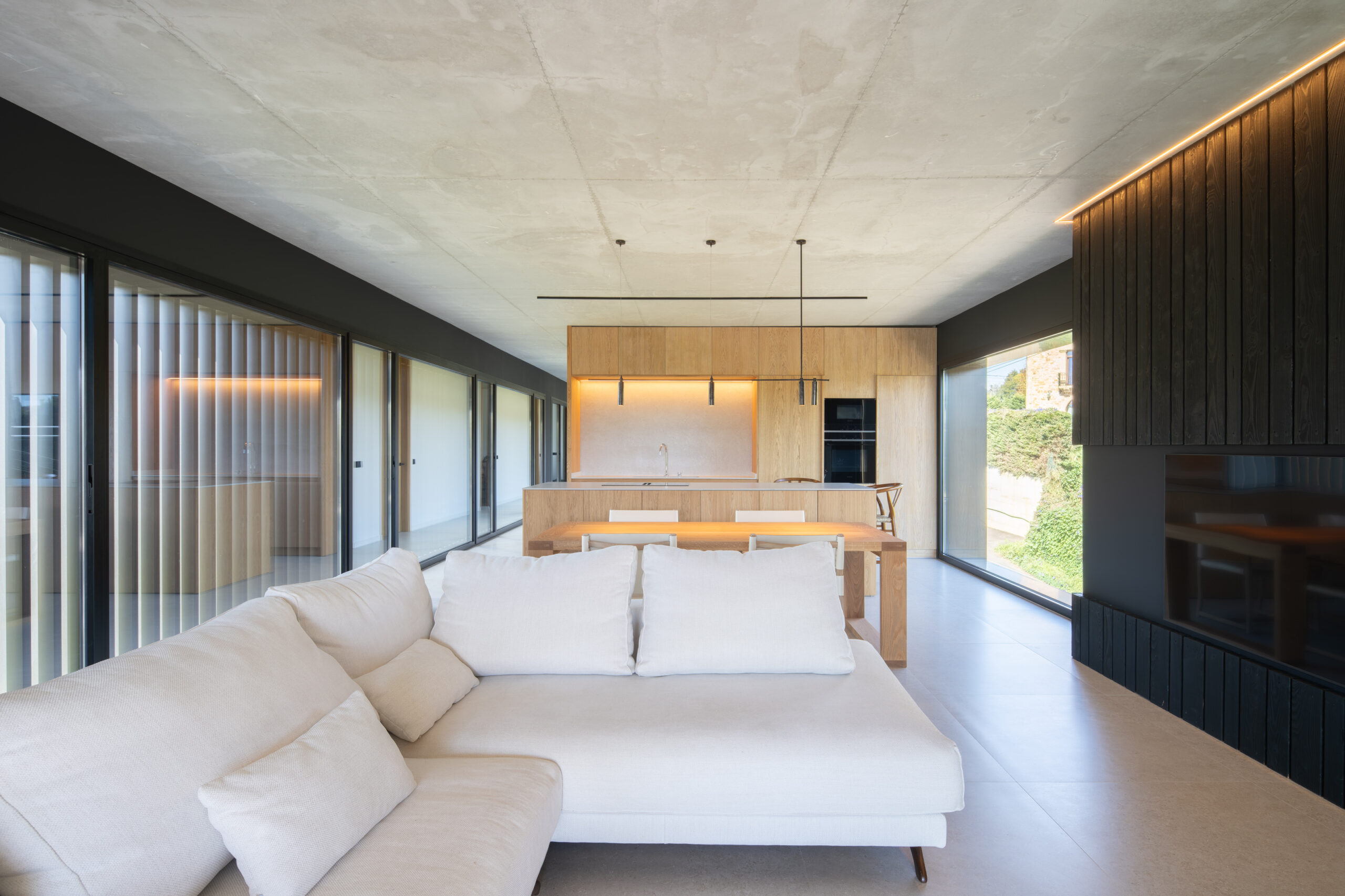
Yakisugi wood embodies this philosophy naturally.
Its traditional charring process retains the essential character of the timber and can reduce the need for some additional chemical treatments.
Its low emissions of Volatile Organic Compounds (VOCs) contribute to maintaining a cleaner and more balanced atmosphere. Less substances released into the air means less interference between the nature of the material and the experience of those who inhabit the space.
The air feels more authentic, closer to the simplicity of a forest after the rain, where each breath feels light and natural.
The absence of formaldehyde adds an even deeper dimension to this feeling of well-being.
In a world where many materials incorporate invisible synthetic compounds, choosing a formaldehyde-free wood is a way to approach a more conscious architecture.
An architecture that not only protects spaces, but also the people who live in them day after day.
Yakisugi reminds us that the most valuable luxury is not always what stands out.
Sometimes it is something much more subtle: cleaner air, a feeling of confidence, the peace of mind of knowing that the materials around us respect both nature and our well-being.
Because when the materials are in harmony with their environment, the space stops being simply a place. It becomes a refuge.
There is a deep peace of mind that comes when we know that the materials around us have been chosen with care.
It is not a sensation that demands attention or that manifests itself in an obvious way; It is a silent calm.
We spend much of our lives indoors.
We breathe thousands of times a day without thinking about it, trusting that the environment around us contributes to our well-being.
Therefore, the quality of the materials that make up a home, a hotel or a work space has a much greater importance than we perceive at first glance.
In conventional construction, many boards, adhesives, coatings, and wood-based materials use formaldehyde-containing resins.
Durante años, este compuesto ha sido ampliamente empleado por sus propiedades técnicas y su coste competitivo.
However, it is also one of the substances that has contributed the most to the phenomenon known as "indoor air pollution", an invisible reality that can be present even in new and seemingly impeccable buildings.
Faced with this, natural and carefully selected materials, such as Yakisugi wood free of added formaldehyde, represent a different way of understanding architecture.
A way closer to nature and more aware of the relationship between spaces and people.
The difference can't always be seen, but it can be felt. It is the serenity of knowing that the surfaces around us are not releasing unnecessary substances into the environment.
Es la confianza de crear espacios donde la belleza no exige comprometer la salud.
In some respects, it is a return to the wisdom of honest materials.
The wood transformed by fire, protected by an ancient and respectful technique, reminds us that the most valuable innovation does not always consist of adding more elements, but rather eliminating what is not necessary.
Because authentic well-being is also born from what is not present: fewer emissions, fewer synthetic compounds, fewer invisible worries.
And although we rarely think about it consciously, there is a special peace in knowing that the shelter we have built for ourselves, our family or our guests offers not only comfort and beauty, but also cleaner air and a healthier relationship with the environment.
A silent peace that accompanies every breath and that turns architecture into something more than a living space:
into an enduring experience of wellbeing.